Scope
Brand Identity & Messaging, UI/UX & Web Design, Omnichannel Campaigns
Industries
Proptech, Fintech, Real Estate, B2C SaaS
Year
2020-2023
Reali simplified the chaos of real estate by bringing buying, lending, and support into one digital experience. Our job was to help them sound as smart and empathetic as their product. We refined the brand identity, built a new messaging framework, and restructured the UX to reflect what homebuyers really wanted: transparency, clarity, and confidence.
15
In-Depth User
Interviews
Interviews
12
Competitive
Product Audits
Product Audits
263
Customer Survey
Responses
Responses
The Challenge
Too Big for The Brand
Buying a home should feel like a milestone, but usually it’s a minefield: confusing listings, endless paperwork, hidden fees, and stiff competition. Reali simplified things by bundling everything into one clear, intuitive platform.
The service was solving problems, but the brand wasn’t keeping pace. The design got your attention, but didn’t hold it for very long. The tone, while friendly, felt forgettable. And the website buried the company’s biggest advantage: a truly integrated real estate experience.
From support tickets to customer interviews, the feedback was consistent: people wanted honesty, not hype. Buyers wanted fewer surprises. Sellers wanted predictable timelines. Everyone wanted to feel less alone in the process. Reali needed a brand approach that felt both credible and laser focused on solving the stresses on modern buyers and sellers.
One of five core segments, the first-time buyer group steered our early decisions on content, layout, and service cues. Similar maps for investors, upsizers, downsizers, and cash-strapped sellers rounded out the playbook.
The Big Idea
Put The Heart Back in Home Buying
Buying a home is stressful, and pretending otherwise only makes it worse. So we named it, normalized it, and made the brand part of the solution. Reali meets buyers where they are, then helps them move forward with confidence.
We redefined Reali’s voice to be the clear-eyed friend who knows the ropes. Not pushy, Just helpful, friendly, and always one step ahead. The visuals and copy invite users to exhale. Every headline has a job: to explain, simplify, or reassure.
Our goal was not to sell a lifestyle but to show the process in a way that felt achievable. That transparency became Reali’s emotional differentiator. The brand would succeed not by promising perfection, but by helping people move through the imperfect parts of buying and selling with confidence.
While competitors sold luxury and aspiration, we focused on what most people actually face: tough decisions, tight timelines, and the need for clarity. The new Reali brand replaced pressure with possibility.

The Approach
Speak Homeowner
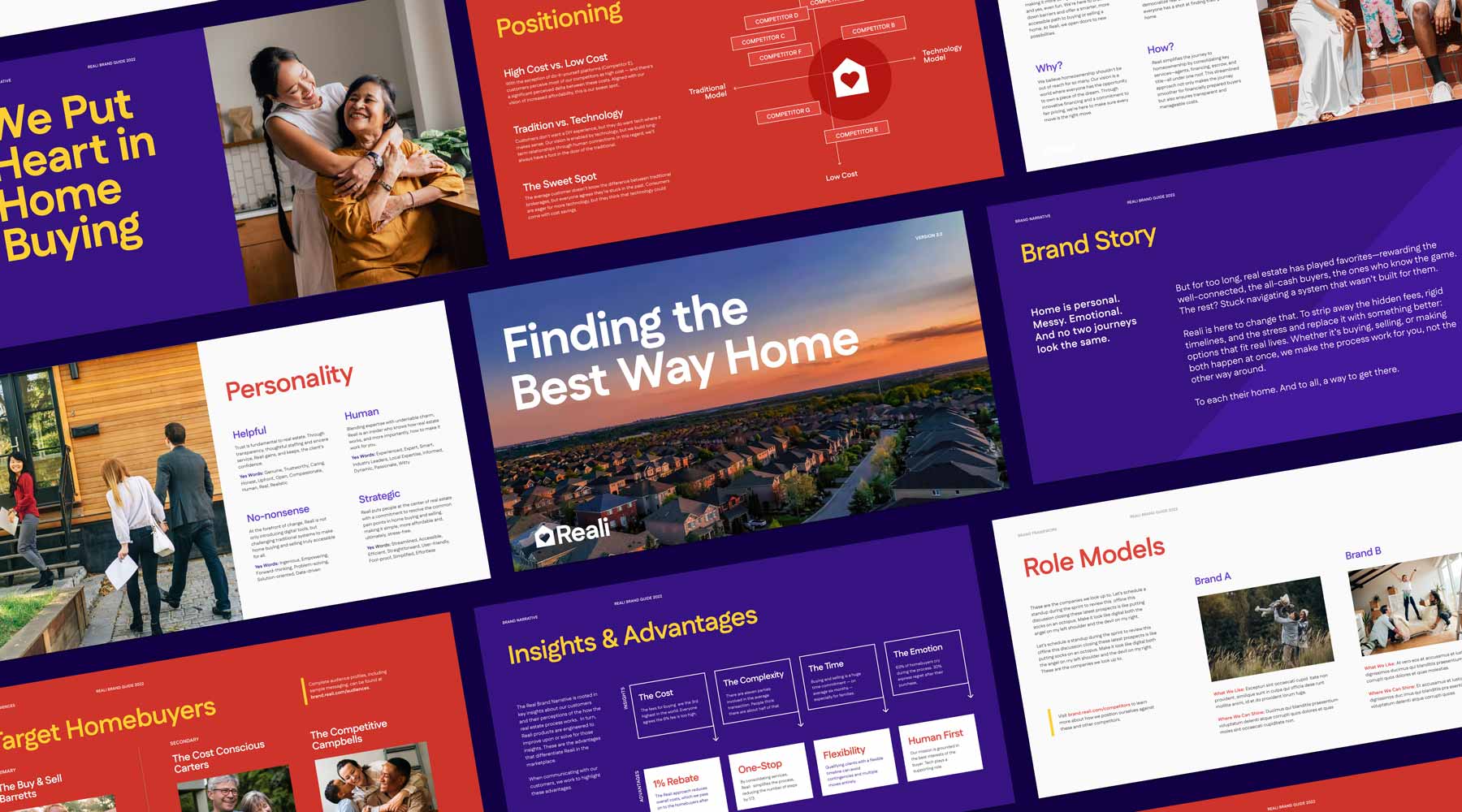
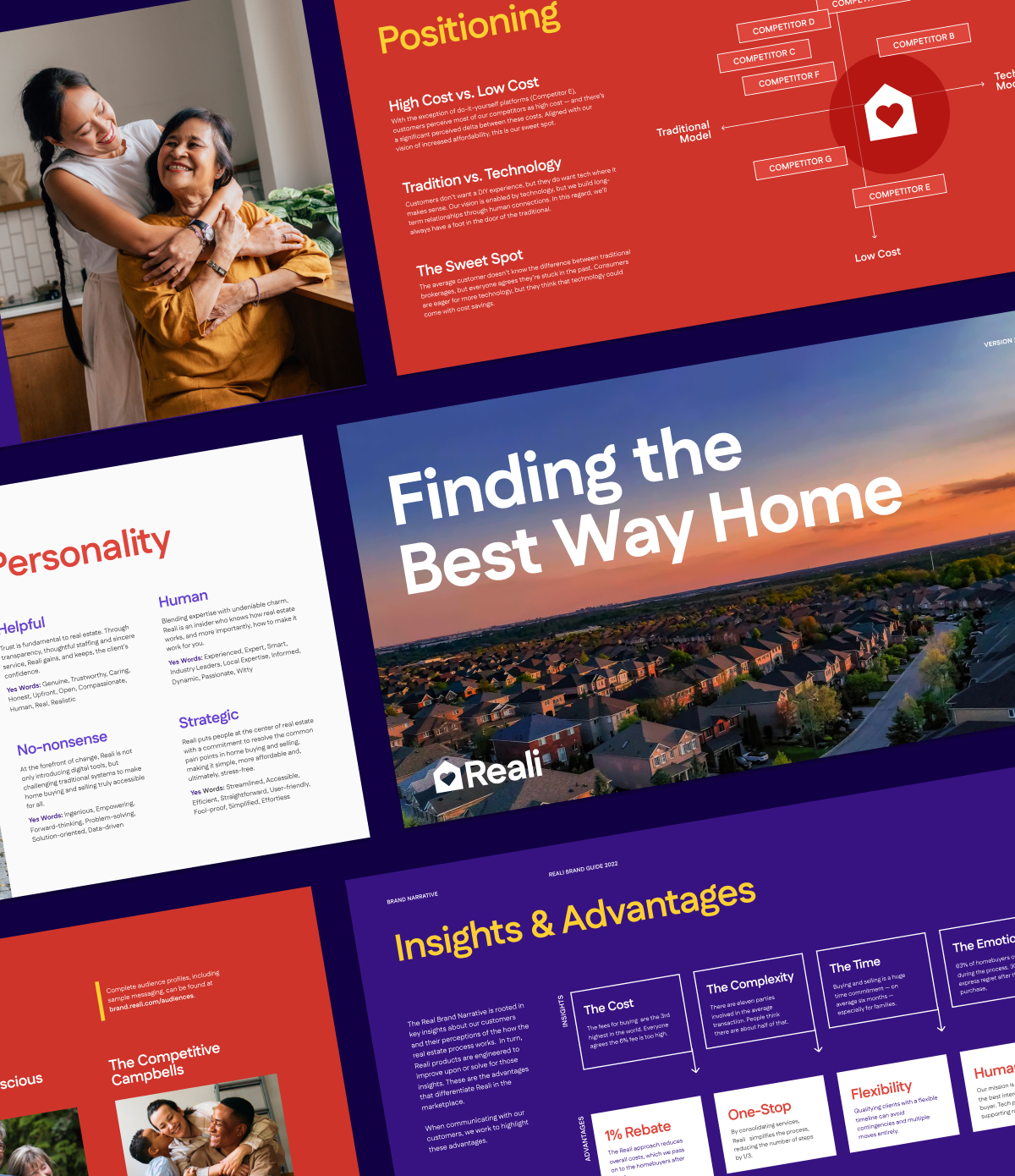
Reali’s competitors sold aspiration. We sold understanding. The result was a brand that feels smart, approachable, and grounded: more proptech partner than a “business blue” cliché.
What changed:
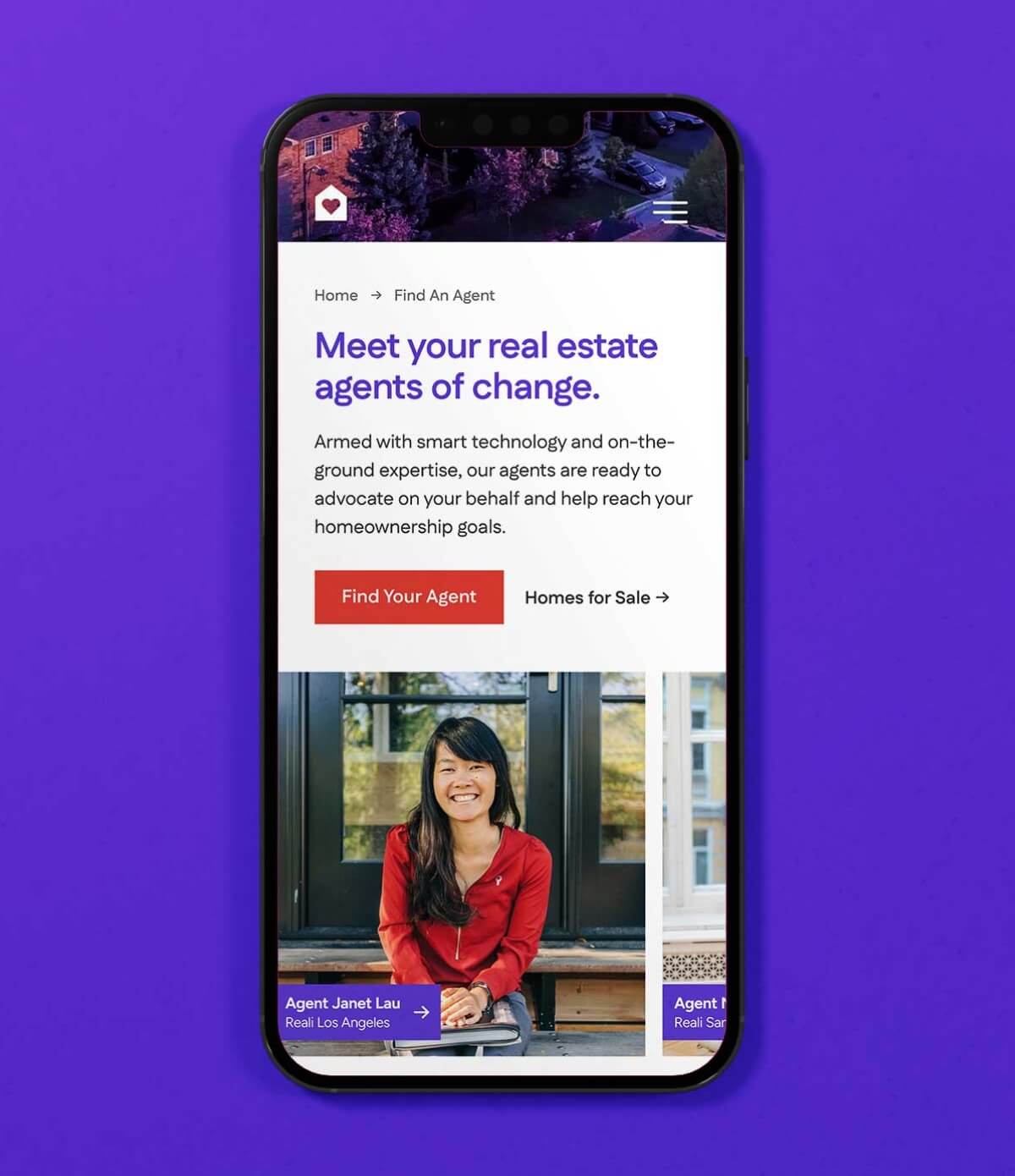
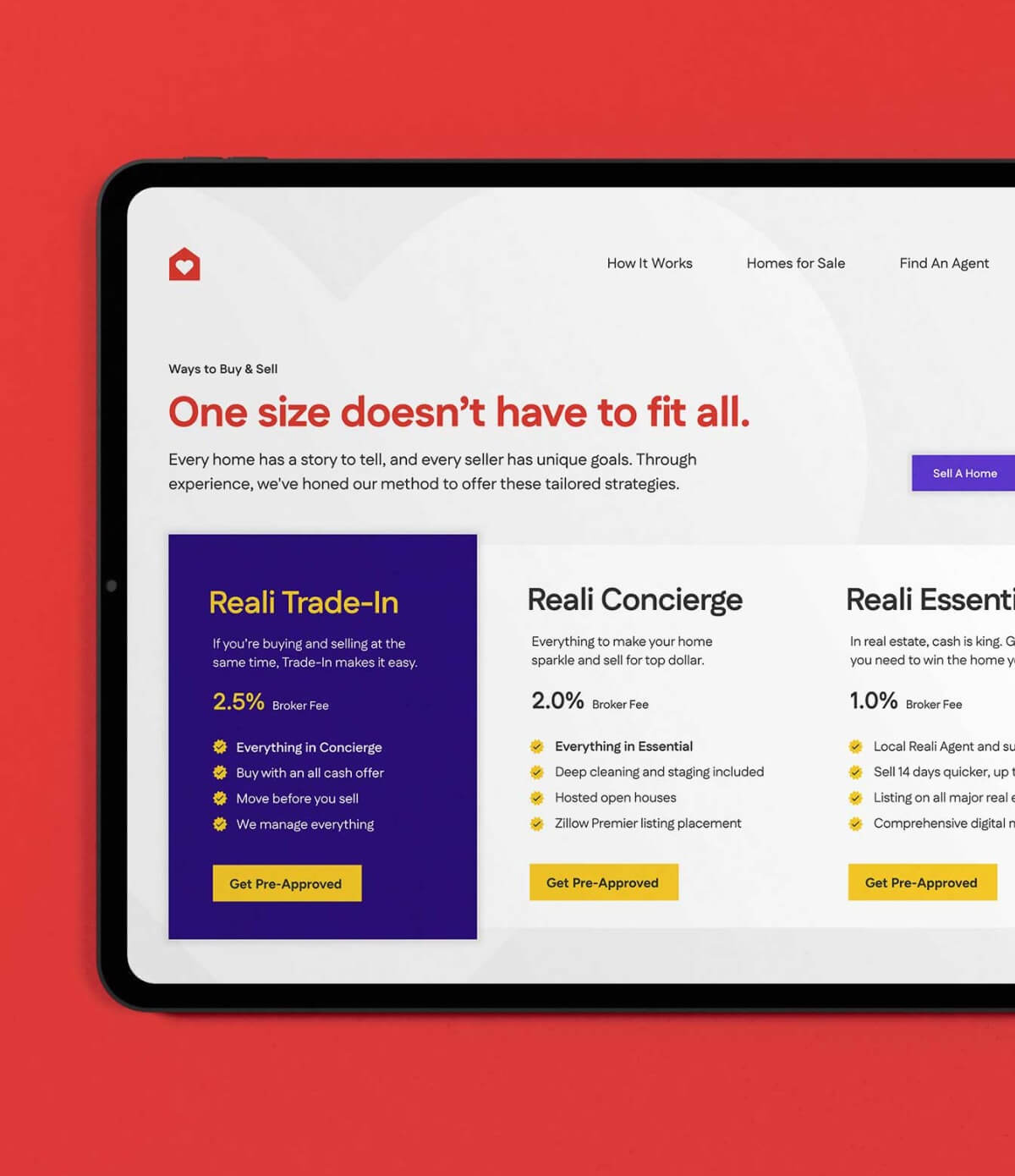
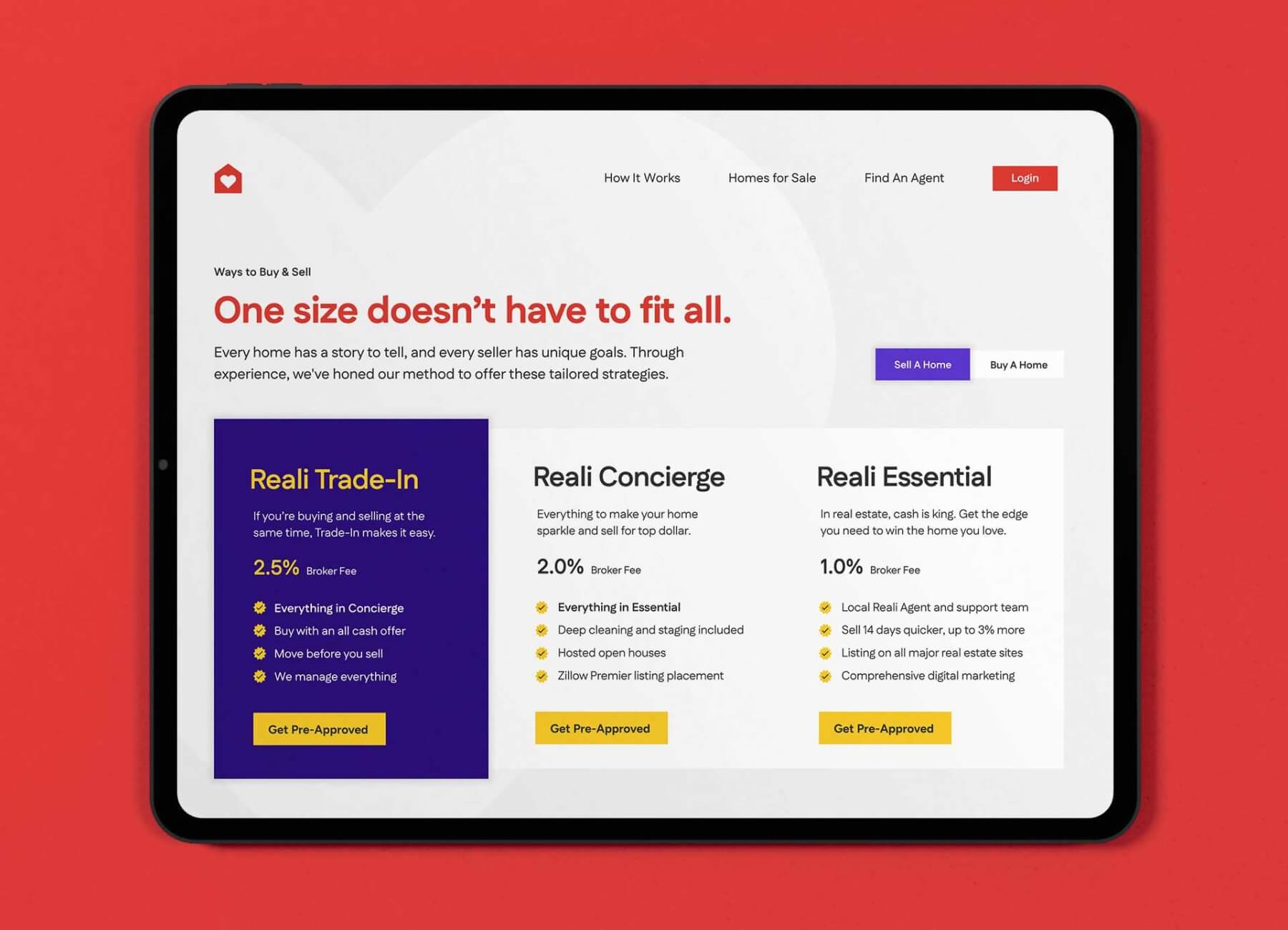
- Color system: Expanded the palette toward confident optimism instead of corporate safety. The brand red stayed (the CEO loved it), but we put it on a leash: minimized, saved for earning attention, then used sparingly to mark action. A small, mostly invisible constraint that shaped the entire palette.
- Typography: One family, used with discipline. Mixed typefaces (used improperly) send mixed signals, and trust was the whole assignment. Customers learned what a Reali message looked like, which had a useful side effect: anything off-brand became instantly easy to spot.
- Imagery: eplaced stock perfection with real homes and real people. Our customers knew the struggles of home buying on top of everything else life throws at them, and Reali didn't shy away from that.
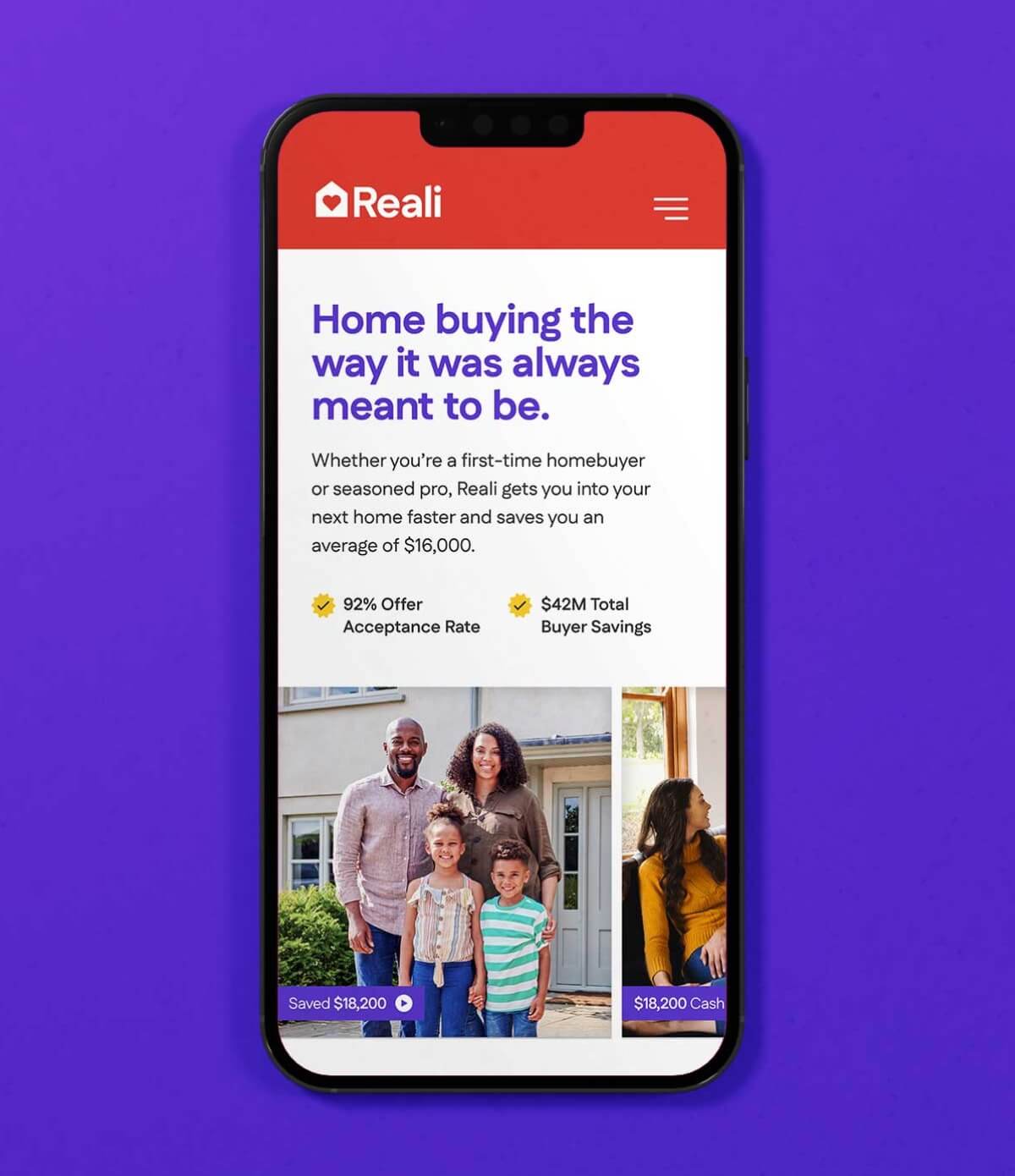
- Interface: Simplified everything. Smarter spacing, a stronger grid, and cleaner modules gave the site clarity and calm. Earlier versions leaned illustration-heavy, which was fun but distracting, and it quietly undercut the message of expertise. Calm reads as competence.
We designed the kind of brand you notice for its honesty, not its gloss. We stripped back unnecessary layers, clarified choices, and wrote messages that explain, not obscure. The idea: no more “fine print” moments.

The Approach
(Continued)
Information architecture overhaul:
- Mapped journeys for five distinct segments, from first-time buyers to cash-strapped sellers, and let each one steer content and layout decisions.
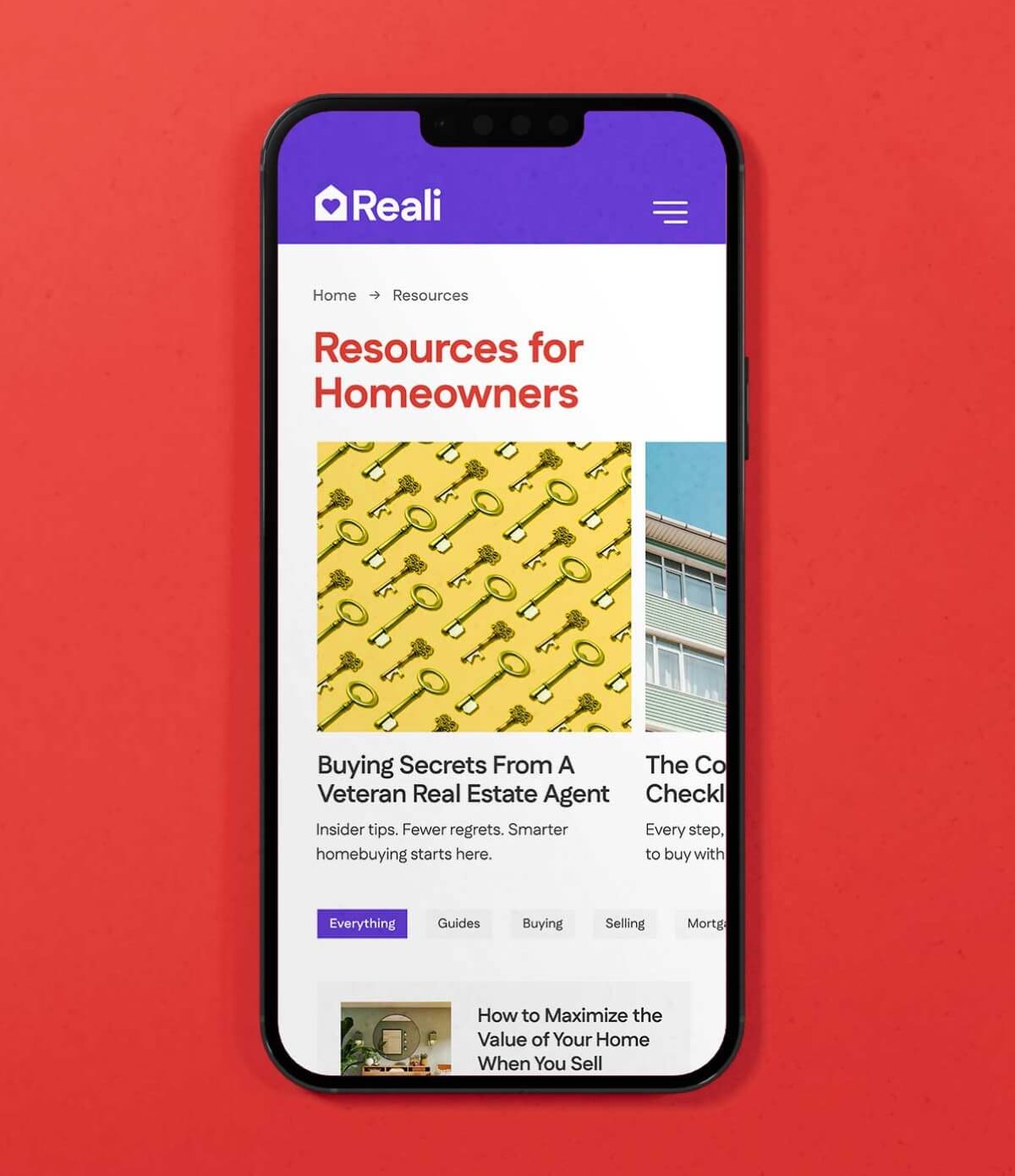
- Built dedicated SEO-rich pages for trade-ins, refinancing, and loans, so high-intent searches landed on real answers instead of a generic homepage.
- Every nav item had to earn its spot by simplifying a step in the journey. If it couldn't justify itself, it got cut.
Unified voice system:
- One voice from product headlines to help desk replies: the clear-eyed friend who knows the ropes. Helpful, one step ahead, never pushy.
- We named the stress of home buying instead of pretending it away, and made the brand part of the solution.
- The standard was "no fine print moments." No marketing speak, no surprises in the footnotes, just straight talk. The voice was where the transparency promise got kept in writing.
Transparency wasn’t just an abstract theme, it was a brand pillar and core design principal, from product to sales. Reali clarified choices, removed filler, and provided detailed explanations at each step so users could make decisions confidently.

Results
15
In-Depth User
Interviews
Interviews
12
Competitive
Product Audits
Product Audits
263
Customer Survey
Responses
Responses
The new brand and website were weeks from launch when Reali was acquired and folded into Flyhomes. The redesign never went public, but internally, the system became a north star. The visual identity, UX patterns, and messaging framework unified marketing and product under one story.
Flyhomes adopted and adapted the system for Reali's marquee product. The tone guide trained teams after the acquisition. And in 2026, with homeowners still facing a difficult market, the Reali brand was resurrected. Sometimes the measure of good work isn't whether it launched on your watch, but whether it was good enough that someone else kept using it.


